






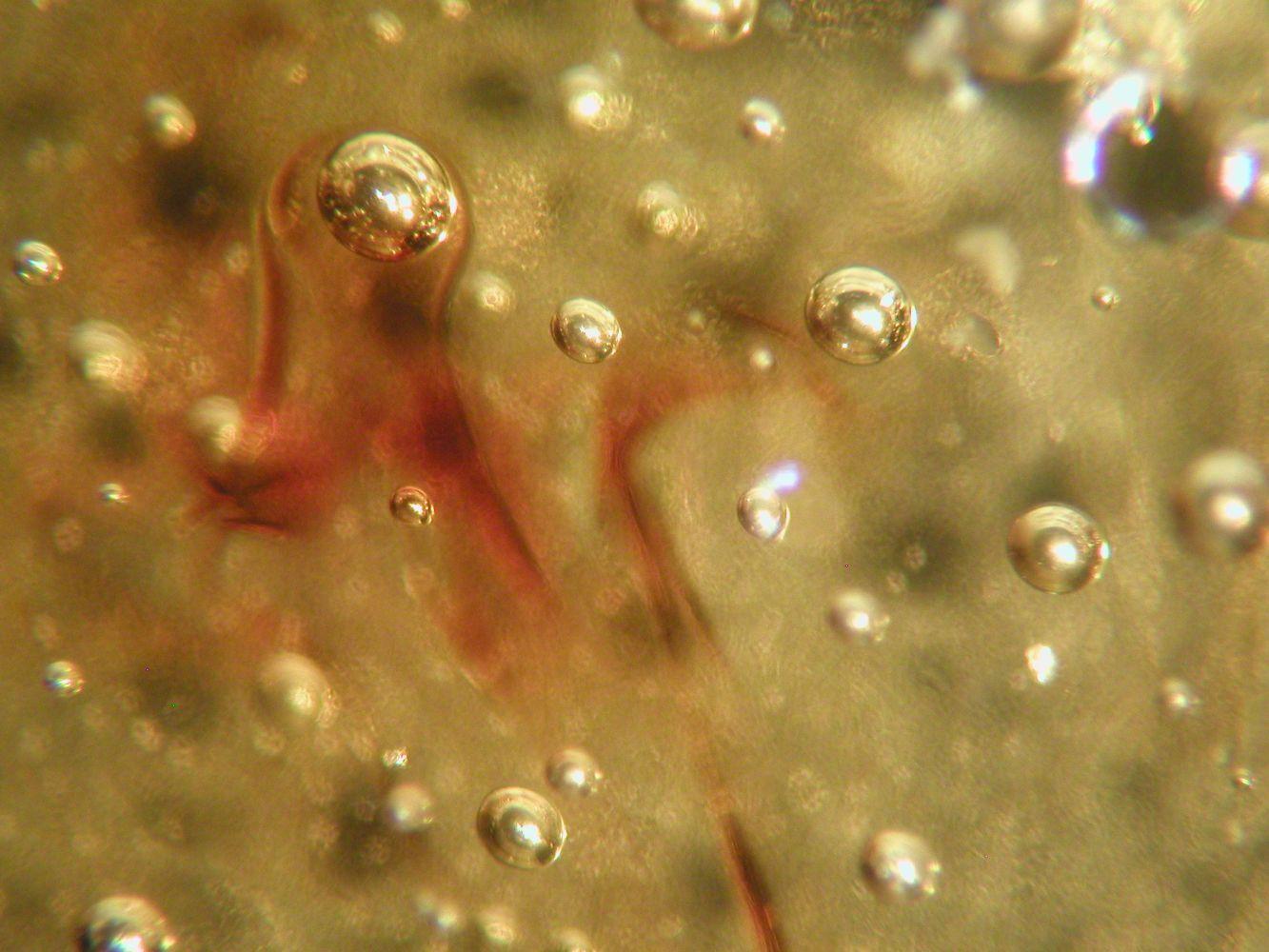
Profile and history of the department
Profile of the department
The Laboratory of Inorganic Materials originated from the former Laboratory of Chemistry and Technology of Silicates, which was jointly established in 1961 by the Czechoslovak Academy of Sciences (ČSAV) and the University of Chemistry and Technology Prague (UCT Prague). In 2012, the laboratory was transformed into a joint research workplace of UCT Prague and the Institute of Rock Structure and Mechanics of the Czech Academy of Sciences (IRSM CAS).
Its research focus primarily encompasses the vitrification of radioactive waste (in collaboration with Pacific Northwest National Laboratory, PNNL, in the USA), processes occurring during the glass melting and their mathematical modeling (in collaboration with Glass Service, a.s.), and the development of special glasses for photonics and optoelectronics (in collaboration with the Institute of Photonics and Electronics of the Czech Academy of Sciences).
History
The original Joint Laboratory for the Chemistry and Technology of Silicates—a joint facility of the University of Chemistry and Technology, Prague (UCT Prague) and the Czechoslovak Academy of Sciences (ČSAV)—was established in 1962; however, the recruitment and assignment of staff for this joint unit had already begun in 1961. Its founding was based on two independent government resolutions from 1960–1961. Acting on these, staff members from the then-Department of Silicate Technology—Associate Professors Šatava and Hlaváč—submitted a proposal (via Prof. A. Regner) to create this joint facility, which resulted in the establishment of the aforementioned Joint Laboratory. Associate Professor Vladimír Šatava was appointed as its head. During the early years of the Joint Laboratory, the following individuals joined as scientific and technical staff: Ing. Jiří Matěj, Ing. Miloš Tichý, Ing. Marie Truhlářová, Ing. Otakar Vepřek, RNDr. František Škvára, Ing. Eva Hlaváčová, and Ing. Bořivoj Zbuzek (the latter focused primarily on electron microscopy, using an instrument acquired by the Department of Silicate Technology). Ing. Matěj, Ing. Truhlářová, Ing. Hlaváčová, and RNDr. Škvára joined the Laboratory as postgraduate research trainees (*vědečtí aspiranti*), as the training of the Laboratory’s own scientific personnel was one of its primary objectives.
At that time, there was a close integration between the Department of Silicate Technology and the Laboratory—in terms of location, instrumentation, and personnel. Furthermore, there were strong ties to the Czechoslovak Academy of Sciences (ČSAV); this was primarily facilitated by Ing. Jaroslav Šesták received his training both at the Laboratory and at the Institute of Physics of the Czechoslovak Academy of Sciences (ČSAV), where he later became a research fellow. Staff members from the Research Institute for Technical Glass—Ing. Strnad and Ing. Dusil—also spent an extended period working at the Laboratory (and later at the KTS); at the time, their primary focus was the issue of gases in glass.
By the mid-1960s, the team had expanded to include additional staff and research aspirants: Ing. Václav Hulínský (who arrived from the Faculty of Technical and Nuclear Physics at the Czech Technical University, ČVUT), Ing. Jiří Götz, Ing. Lubomír Němec, Ivan Jonáš (a graduate chemist), and Ing. Jan Bumba. They were later joined by Ing. Ludmila Bělovská (from the industrial sector) and, subsequently, Ing. Pavel Hrma (from a secondary technical school for the glass industry). Vendulka Kollertová joined the Joint Laboratory as its secretary, while Alexandra Pawingerová, Petr Týle, and Vlasta Janatková served as laboratory technicians during the early stages; Elen Hladká joined them in this capacity starting in the late 1960s. From the very beginning, Ing. Otakar Vepřek served as the indispensable secretary of the Joint Laboratory. The topics addressed by the Laboratory reflected the needs of the silicate industry as it existed at the time. Research focused primarily on processes or phenomena directly related to industrial operations: the solidification of inorganic binders (using gypsum as a model system, studied by Prof. Šatava), the corrosion of solids in glass melts (Ing. Vepřek), the corrosion of glass by aqueous solutions (Ing. Matěj), and gas equilibria in glass melts (Ing. Götz). All of these topics also served as the subjects of doctoral (Candidate of Sciences) dissertations.
In 1974, Prof. Šatava was removed from his position for political reasons, and Prof. Staněk subsequently led the Laboratory until 1983. Consequently, the Laboratory and the Department shared the same head, which led to further overlap in research topics and the movement of staff between the two units. According to a 1970 report prepared by Assoc. Prof. Šatava for the university administration, the Joint Laboratory had 19 staff members at that time—9 employed by the university, with the remainder coming from the Czechoslovak Academy of Sciences (ČSAV). From its inception, the work of the Joint Laboratory was concentrated in the three main areas mentioned above. In addition to these, the methodology of Differential Thermal Analysis (DTA) was further developed—a field with a long-standing tradition at the Department (KTS) dating back to the immediate post-war years, largely thanks to Prof. R. Bárta, an ardent advocate for new theoretical approaches and research methods.
From the 1970s onwards, research in the three aforementioned areas continued to develop successfully, with new topics and approaches emerging. The laboratory was equipped with increasingly sophisticated instrumentation (gas chromatographs, simultaneous DTA and TGA). Conversely, the laboratory also lost staff to emigration—specifically RNDr. Ivan Jonáš, Ing. Eva Vosáhlová, and later Ing. Pavel Hrma (an excellent theoretician) and Ing. Jiří Žlutický (an irreplaceable experimentalist). Nevertheless, the laboratory’s scientific capabilities continued to evolve throughout this period. Before his departure, Ing. Hrma addressed—at a high theoretical level—issues concerning the corrosion of refractory materials and the rounding of glass blanks; later, he focused on the fundamentals of modeling the glass-melting process. His work earned him significant international acclaim.
A new research topic was the corrosion of molybdenum electrodes, which proved to be a major challenge during the large-scale implementation of electric melting in Czechoslovak glass manufacturing—an initiative strongly championed by Prof. Staněk. Ing. Matěj and Ing. Hulínský took on this task; Ing. Hulínský introduced and extensively utilized electron microanalysis (using a new instrument) to investigate the problem. Ing. Matěj subsequently developed this subject into a respected field of study—the interaction between solids and glass melts under the influence of an electric current—with theoretical and experimental findings that remain in use today by glass manufacturers both in the Czech Republic and abroad.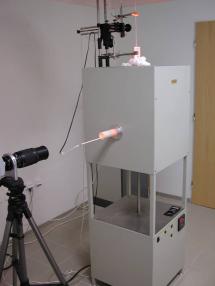
Ing. Němec focused on the kinetics of gas diffusion and dissolution in glass melts. Together with Ing. Žlutický, he developed an apparatus—still in use today, both domestically and internationally—for monitoring (and, currently, performing image analysis of) processes occurring within glass melts. Success was also achieved in the theoretical quantitative description of these processes, which gradually paved the way for the first mathematical models of the glass-melting process.
Ing. Němeček joined the Laboratory from the field of glass research; he worked on solving the fundamental equations that describe the behavior of glass melts within glass-melting equipment and expanded the Laboratory’s collaborative efforts in this area. Thanks to Prof. Staněk’s industrial contacts, as well as the results produced by the Laboratory and the Department of Glass and Ceramics Technology (KTS), significant large-scale collaborations—such as the one with Sklo Union Teplice—were established. These partnerships ultimately laid the foundation for a highly regarded Czech school of mathematical modeling for the glass-melting process.
Meanwhile, the study of the solidification and hardening of inorganic binders gradually branched into two distinct areas: Prof. Šatava continued to develop the theoretical underpinnings of the process using model systems, while Doc. Škvára—who later became a member of the Department—focused on the solidification mechanisms of concrete and waste processing, drawing inspiration and support from extensive industrial collaborations. At that time, the Laboratory collaborated with a well-developed research infrastructure in what was then Czechoslovakia (notable examples in the glass sector include the State Glass Research Institute in Hradec Králové and the Sklo Union Research Institute in Teplice; in theoretical fields, the Institute of Mathematics of the Czechoslovak Academy of Sciences). This collaboration yielded results and contributed to the Laboratory’s strong experimental capabilities, both through the acquisition of instrumentation and the development of in-house methods. In addition to the core team, Ing. Freivolt worked on research into the melting process for several years, while Jana Hurníková established herself within the inorganic binders group.
During the 1980s, the Laboratory’s latest findings began to feature increasingly in the doctoral theses of external researchers—including Ing. Michal Mühlbauer (from Sklo Union Teplice), Ing. Jiří Ullrich (who later joined the company Glass Service), and Ing. Jaroslav Kloužek (who subsequently became a member of the Laboratory itself), among others.
In the mid-1980s, Dr. Götz—then the head of the Joint Laboratory—began establishing a new group focused on glass optical waveguides. With the assistance of Prof. Staněk, a team of chemical and physical experts in this field was assembled, tasked with developing glass optical fibers for telecommunications. The knowledge and methods gained in this process later served as the foundation for high-level research into specialty glasses and optical fibers for photonics during the 1990s, conducted under the leadership of the director, Dr. ...at the Institute of Electronics and Photonics of the Czech Academy of Sciences (CAS). This research continues to this day.
The development of materials research subsequently led, in 1985, to the establishment of an independent Institute of the Chemistry of Glass and Ceramic Materials (ÚCHSKM) within the Czechoslovak Academy of Sciences (ČSAV), thanks to the efforts of Prof. Staněk and Dr. Götz. Dr. Götz was appointed to lead the Institute. By that time, the original Laboratory—which had later become an Institute—occupied several detached facilities across Prague. The tradition of the Laboratory as a joint research unit was interrupted by the formation of this new Institute, lasting until 1994; however, the original research group—which continued to focus on material processes—remained at the University of Chemistry and Technology, Prague (UCT Prague). In 1990, Dr. Ležal—a staff member of the Institute who specialized in the chemical aspects of optical fibers—became the director of the ÚCHSKM. During the restructuring of the Academy of Sciences in 1993, the ÚCHSKM was among the institutes slated for closure; however, the Academy ultimately reinstated the original joint research unit. From the former Institute, only the research groups focused on glass processes (based at UCT Prague) and Dr. Ležal’s group—which dealt with the chemical challenges involved in preparing specialized glasses with optical-fiber properties—were incorporated into the re-established Laboratory of Glass and Ceramic Materials.
The 1990s, in the field of glass melting processes, were characterized primarily by the development and application of experimental and mathematical models of melting processes, as well as by research projects conducted in collaboration with Glass Service and major international glass manufacturers (such as Schott, Saint-Gobain, Asahi Glass, PPG USA, and Samsung).
Dr. Ležal’s group successfully shifted its focus toward special glasses with high infrared (IR) transmittance, while continuing its collaboration with the group led by Ing. Matějec—originally part of the Institute of Chemical Technology of Silicate Materials (ÚCHSKM), now the Institute of Photonics and Electronics of the Czech Academy of Sciences (CAS). The Laboratory’s difficult financial situation led to a high turnover of staff; over time, several researchers passed through the laboratory, including Dr. Bernard, Ing. Provazníková, Dr. Lubas, and Ing. Luxová. Dr. Rohanová later moved to the Institute of Glass and Ceramics, while Ing. Krupková joined the team; meanwhile, Elen Hladká, a long-time staff member, departed. At that time, Dr. Ležal’s group included Ing. Pedlíková and Ms. Popovičová.
In 1994, Prof. Němec was appointed Head of the Laboratory. Following an intervention by Dr. Illnerová—then Vice-President of the Czech Academy of Sciences—the unit was renamed the Laboratory of Inorganic Materials (LAM). It was affiliated with the Institute of Inorganic Chemistry of the CAS and secured premises at what is now the Institute of Rock Structure and Mechanics of the CAS. Subsequently, the situation at the joint research site located at the University of Chemistry and Technology, Prague (UCT Prague), also stabilized.
Using funding from the CAS as well as revenue generated through commercial contracts, well-equipped, high-temperature chemistry laboratories were established across the two floors occupied by the Laboratory. Prof. Němec, who headed the Laboratory, served as Director of the Institute of Inorganic Chemistry of the CAS starting in 1996, overseeing both units until 2004. In September 2009, the position of Head of LAM was assumed by Ing. Jaroslav Kloužek, CSc., a long-standing member of the Laboratory.
The most recent period in the history of the Laboratory of Inorganic Materials—roughly from the year 2000 onwards—has been characterized by efforts to stabilize the staff, as well as by the modification of existing research topics and the introduction of new ones. The Laboratory expanded its scope to include ceramics—specifically the synthesis of leucite-based composites for dental applications (in collaboration with the Department of Glass and Ceramics at UCT Prague and Prof. Šatava)—while its traditional research focus on the glass-melting process shifted toward exploring new concepts for melting technology. Following the passing of Dr. Ležal, Dr. Petr Kostka assumed leadership of the special glasses group. Research activities are conducted in close cooperation with leading international institutions in the field.
In its current form, the Laboratory of Inorganic Materials is smaller than the original Joint Laboratory of Silicates; the average number of staff members from UCT Prague and the Institute of Inorganic Chemistry (IIC) is around thirteen, with some personnel employed via grant-funded projects. Over the years, the Laboratory has secured numerous research grants from the Grant Agency of the Academy of Sciences of the Czech Republic (GA AVČR), the Czech Science Foundation (GAČR), and the Ministry of Industry and Trade (MPO), as well as projects in collaboration with international companies.
In addition to their regular publication activities, the Laboratory’s staff contributed chapters to the book "Glass Defects", authored primarily by Prof. Bartuška (published in Czech in 2001 and in English in 2008), and to the book "Glass Melting", authored primarily by Ing. Antonín Smrček (2008). Between 2006 and 2011, the Laboratory of Inorganic Materials (LAM) served as the principal investigator for a grant project funded by the Ministry of Industry and Trade (MPO) titled "New Glass and Ceramic Materials and Advanced Methods for Their Preparation and Manufacturing" (with a budget of approximately CZK 75 million), carried out in close collaboration with the Department of Glass and Ceramics at the UCT Prague, and the Institute of Inorganic Chemistry of the CAS.
As of the beginning of 2012, the Laboratory of Inorganic Materials established a new partnership; it now operates as a joint research unit between UCT Prague and the Institute of Rock Structure and Mechanics of the Czech Academy of Sciences.
In recent years, collaboration with the Pacific Northwest National Laboratory (PNNL) in the USA has been revived, and a research group led by Ing. Richard Pokorný, Ph.D., is currently involved in research on the vitrification of radioactive waste.